Dow Jones

“You cannot escape the responsibility of tomorrow by evading it today.”

The economy continues to expand and consistently exceed expectations across most data series. Yet confidence surveys continue to languish well below pre-pandemic levels; at the same time, investor bullishness has rarely been higher. This is unusual and should reconcile itself to some consistency. I would expect confidence to rise. Yet truthfully, it is fiscal dominance –¬ more so than monetary dominance ¬– that is the more significant issue. The debt ceiling is currently suspended. In January 2025, however, it will automatically come back into effect. This means that the U.S. Treasury will not be able to issue more debt until Congress raises or suspends the ceiling again. However, they still have spending obligations and are running structural deficits due to the policies Congress has implemented for decades. Thus, government spending could potentially be forced downward – depending on whether conservatives or liberals control Congress. If that happens, it would be a net positive for the economy.

“You cannot escape the responsibility of tomorrow by evading it today.” Read More »
“The greatest threat facing humanity is a radical Islamist regime meeting up with nuclear weapons.”

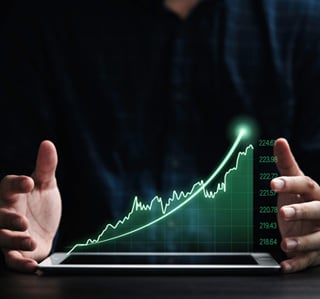
The S&P 500 traded to yet another all-time high last week: $5,878. The benchmark closed Friday at $5,865, up 0.9% on the week, while the Dow rose 1%, and the NASDAQ was up 0.8%. The U.S. equity market performance marked the 6th straight week of gains––the longest winning streak of the year.
This should surprise no one. This is an unsurpassed, debt-fueled, inflationary growth cycle.
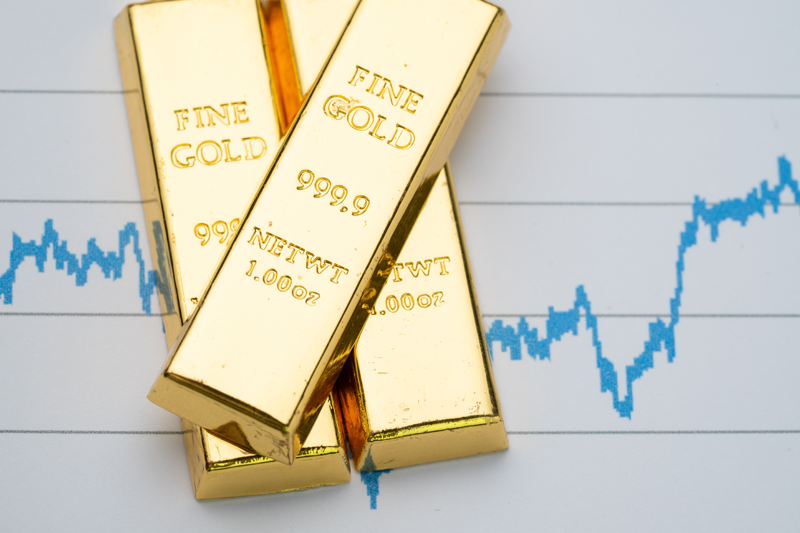
Gold, too, is at another all-time high ($2,749.)
70% of S&P 500 companies reported earnings, and 75% beat expectations, which (truthfully) were marked down over the last month––so, essentially, coming in close to expectations (+6%).
Treasury yields continue to climb and have done so since Powell cut the Fed funds rate on September 18th. This confirms that the financial system, the economy, and markets do not require more stimulus at a time when debt and deficits, along with robust consumer spending and a growing labor force, are providing ample liquidity. 10y Treasuries were bought at 3.595% the day before (3.595%) and have risen to 4.217%. That’s a yield increase of +0.62%.

“The greatest threat facing humanity is a radical Islamist regime meeting up with nuclear weapons.” Read More »

“Neither a state nor a bank ever [has] had the unrestricted power of issuing paper money without abusing that power.”

Stocks rallied smartly last week. The Dow was up 2.6%, The S&P 500 rallied 4.0%, and the Nasdaq jumped 6.0%.
Growth stocks outpaced value shares by a wide margin. The big-cap mega-scalers led the rally, and the poster child for the AI revolution was the clear winner as rallied 16%!
Don’t get too excited, though; the broad market (S&P 500) remains within its range since April. The S&P 500 is marginally
(-0.50%) below, the Nasdaq is -5% below, and the Dow is -17.56% below all-time highs. Markets are skittish and fearful of change.

“Neither a state nor a bank ever [has] had the unrestricted power of issuing paper money without abusing that power.” Read More »

“Bringing inflation down to the Fed’s 2% goal while maintaining a healthy labor market is the number…”

The rising sentiment towards a Fed rate cut seems premature—even for September 18th. Financial conditions are easier than they have been in two years. The S&P 500 is still up by 14.5% for the year (just below the Nasdaq’s 2024 return of 15.6%), but it sure doesn’t feel like it, even though it remains well above average returns over the last 15 years.

“Bringing inflation down to the Fed’s 2% goal while maintaining a healthy labor market is the number…” Read More »

“In this new global environment, policymakers, even those previously in the ‘lower forever’ camp…”

Interest rates drive everything, and they are as volatile and directionally uncertain as they’ve ever been. So are the global macroeconomics driving them. Global fund managers are required to make bets on outcomes for stocks, currencies, and commodities based on the cost of money. If perspectives on rates are so dispersed, how can we judge the value of the things that are driven by them?

“In this new global environment, policymakers, even those previously in the ‘lower forever’ camp…” Read More »

“What comes next is weak economies and tough policy choices.”

The battle at hand is to reduce inflation. The Fed has been aggressively raising Interest rates while
reducing its balance sheet by $95bn/month, liquidity is being drained from both the financial system and
the economy, and market volatility is rising. The ramifications will be significant. Therefore, I remain
defensive and have maintained the status quo in my portfolio.

“What comes next is weak economies and tough policy choices.” Read More »